
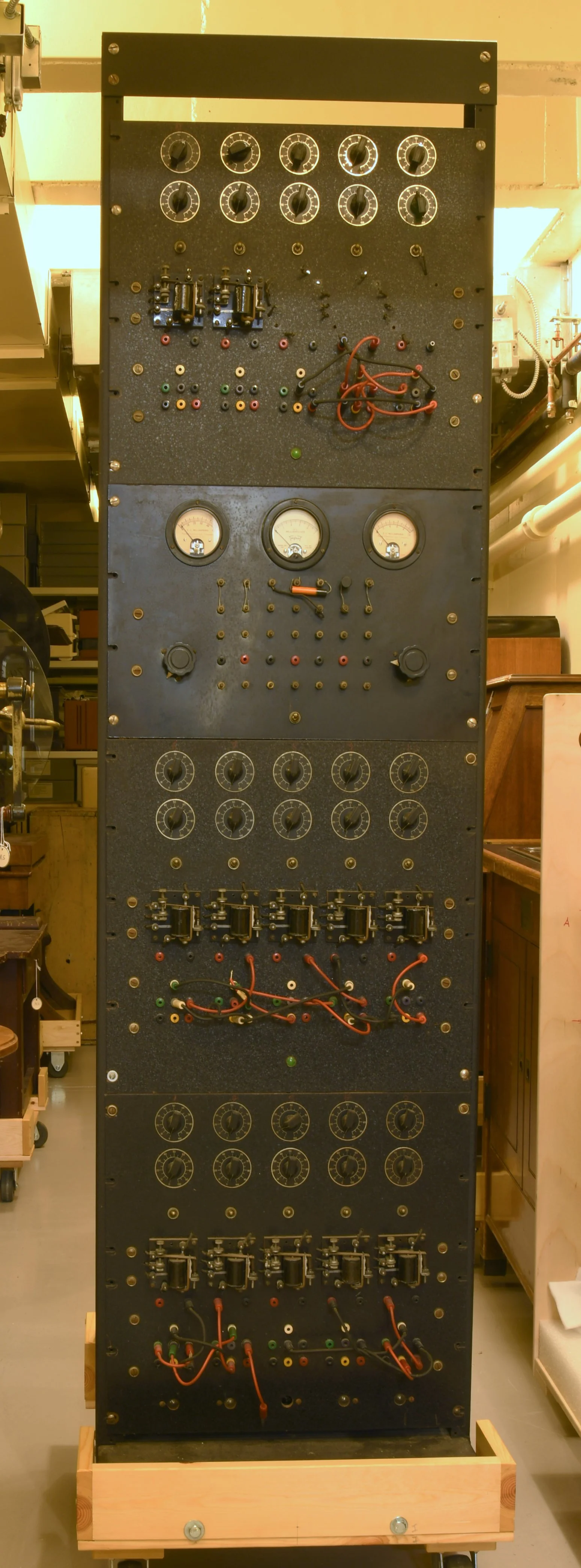
Anyone interested in computer science might be familiar with the Schmitt Trigger, an important component of modern computing. Otto Schmitt, its inventor, was a graduate student at Washington University and later a professor at the University of Minnesota.
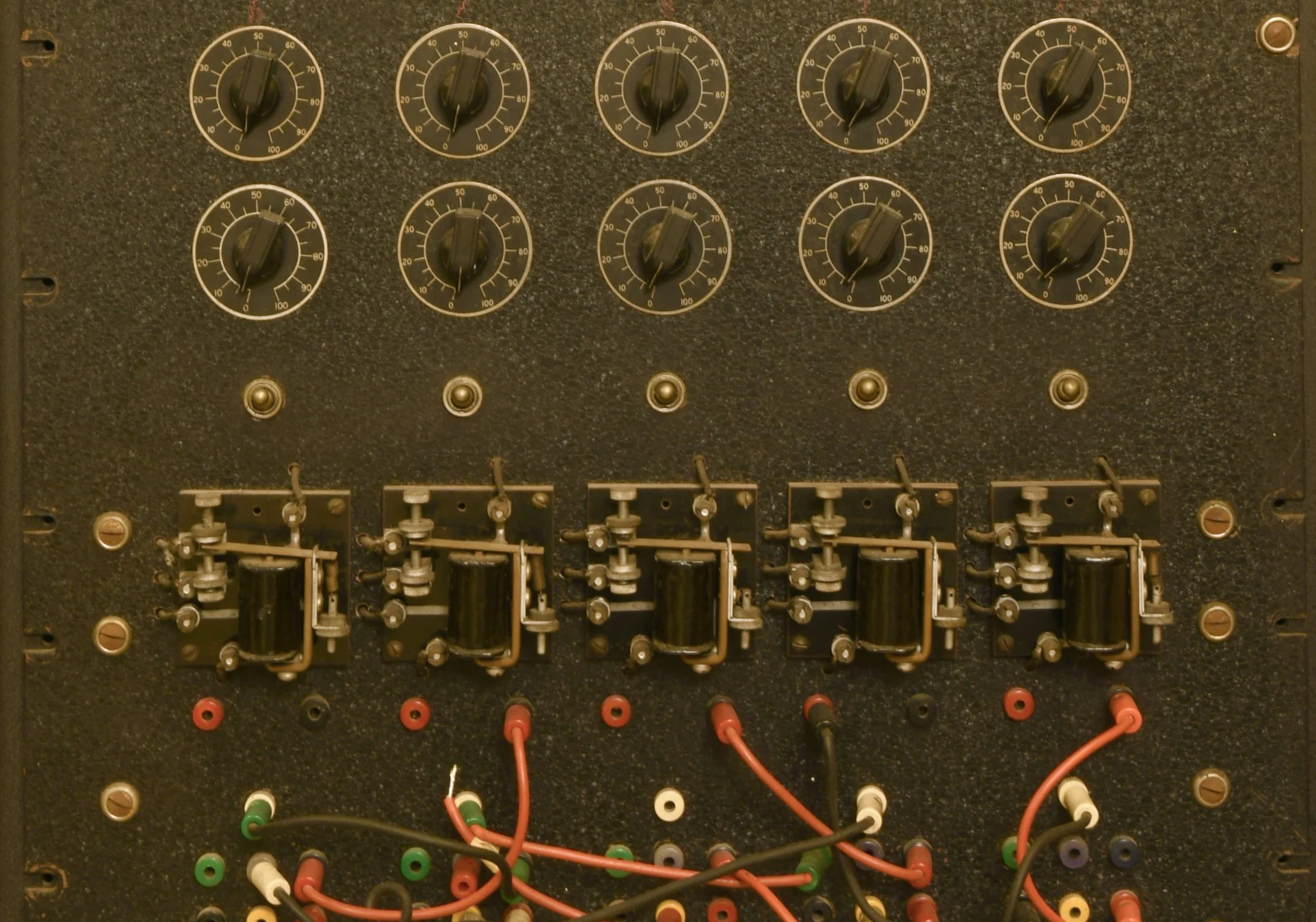
One of the highlights of the Bakken Museum’s artifact collection is Otto Schmitt’s graduate dissertation project from 1937 - the prototype of the device that was later called the Schmitt Trigger. The prototype is over six feet tall, but these days a Schmitt Trigger is small enough to fit on the tiniest circuit boards.
Throughout his career, Schmitt found inspiration in the natural world. He coined the term “biomimetics,” which is the concept of using functions and designs from nature as inspiration for innovations in technology. The idea for the Schmitt Trigger, which was first called a “nerve computer,” came from studying the neural impulse propagation of squid nerves. Schmitt’s device mimics the way that the nerves process electrical signals, especially in environments that are “noisy” with electrical stimuli. As input increases, the nerve switches to “on” when a certain threshold is passed. Similarly, when input decreases, the nerve switches to “off” at another threshold. The result is that electrical signals across a range of voltages are sorted into one of two sets, now called a binary system. This seemingly simple concept makes common processes in modern computing possible.